Showing posts with label book review. Show all posts

November 23, 2009

Philip K Dick was not Philip K Dick, But Really He Was.

And now a long-delayed post on Philip K. Dick. What can I say--teaching 3rd graders about musical scales, and feeling always watched, somehow got in the way of writing, though I will say that it put me in the right mood for 'ol Phil.

Let me start by talking about the difficulties I've had writing this. Probably the biggest thing blocking me from writing intelligently about his work is that the subject of most Philip K Dick novels is a character named Phil Dick. I need to work hard to avoid thinking that I know anything about the biography of this fellow, because all I know is cobbled together from Radio Free Albemuth, Valis, the Clans of the Alphane Moon, and actually everything the guy ever wrote. For instance, I keep on thinking Mr. Dick was imprisoned by Richard Nixon and sent to internment camps along with most of the other intellectuals of the era.

Did that happen?

Right.

So what can I say about writing that's theoretically biographical, but about whose biography you don't know anything except the fiction?

Well, it's a double-fake, we think we've discovered something about him (aha!) but then realize that the secret we've discovered is in fact a deception. Behind the curtain, we think there's a wizard, but really it's just someone wanting you to think there's a wizard. So I can bring it into the idea of the "double-fake" that pops up again and again in his writing.


In the same way that the solution found in Minority Report (the precogs are all screwy!) turns out to be a fake meant to be found (nope, the military just wants you to think the precogs are screwy), Scanner Darkly uses the identity loss to cover the fact that it's intentional (sent to infiltrate the pharmaceutical company), it's all over the place in his writing. Things not just aren't what they seem, they aren't even what they don't appear to be.

Were I a better continental philosopher, I'd write about Lacan, or at least about the Purloined Letter to discuss it. Not being this, I'll suggest that you, yes you, dear reader, take a look at that.

So why did he do this? Who knows. Let's just talk about it in comparison to his contemporaries. Phil Dick's career spanned roughly the early 50s-the early 80s, and most of his "double fakery" was written during the first part of his career, from the early 50s through late 60s. The time and forums in which he wrote were full of the great earnest period of sci fi. 30s camp had retreated into the works of Clarke, Asimov, Heinlein, and all the others in love with the idea of the future. Phil Dick at this time, with his notion of the future not only as not better, but not dramatically different from the present, is something radical.

But, as we know from the double fake, it is not as it appears to be beneath the surface. Not only does he ask to look below the facade, he looks at those who question the facade.

More to be said. Always more to be said. But in this case, go read the books/stories. They're short.

November 16, 2009

PKD

So I won't be able to write up a Phil Dick post today, but enjoy this:


November 15, 2009

I'm Phil Dick and So Can You!

(Part 2 in the PKD series. Tomorrow there'll be a more intensive piece by yours truly, then another one from Ben)


Let's start today's (very short) piece on Philip K Dick with a top 7 list (in a very shaky order). Partially subjective, partially 100% fact, it's a damn good list:

  1. Three Stigmata of Palmer Eldritch
  2. Valis
  3. Radio Free Albemuth
  4. Man in High Castle
  5. Flow My Tears the Policeman Said
  6. Penultimate Truth
  7. Now Wait for Last Year


Three Stigmata, while later partially disowned by Phil Dick as being dangerously nihilistic contains it all. It is the way to start reading the guy.  No connection to the above film by Nacho Vigalonda. But maybe the film (in 3 parts) is good, if only for the series of doublecrossing doublecrosses, the pathos, and the mean but goofy humor.

Anyway, a real post tomorrow

November 9, 2009

Winter of Our Awkward and Midsummer Night's Haiku


We here at Awkward Haiku, do solemnly pledge to read 5 Shakespeare plays over the course of this upcoming winter, and write about them.

Why? Well. We believe in Canons here (they're real. they're like cannons but with one fewer n). We haven't read any Shakespeare since High School, and think it's important to reacquaint ourselves with the central literature of the English speaking world.

So every 2 weeks we'll read a new play. During the two weeks one of us will write about it, shoot videos about it, and record radio shows about it.

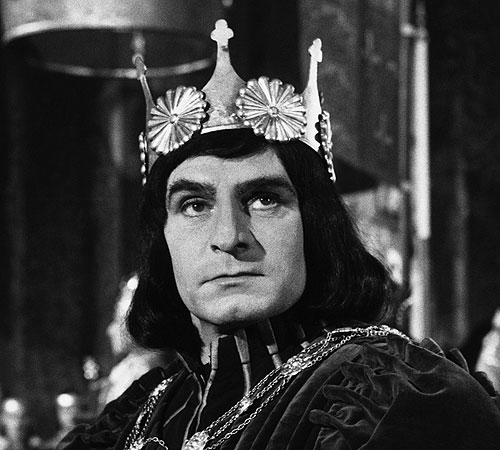
We're starting with Richard III. Read along with us! It'll be fun. A prize will be given for pictures of readers holding copies of the plays of the week.


And of course, please suggest away. This is a community effort. Want to read A Comedy of Errors next? (I do!) Let us know, we'll do it. Troilus and Cressida? (I hope not) Let us know. It's the canon. There are entertaining and good things to be found in any of them. Except for Timon of Athens. Who cares.

Our first post on the subject will come next Tuesday (the 17th).

Until then, enjoy Peter Sellers performing "A Hard Days Night" in the style of Olivier's Richard III.


*Note, we may get bored and not do this. It is after all just a way for me to reread Richard the Third and write about it. It may go no further. You have been warned.

October 31, 2009

What Awkward Haiku is Reading

The Stainless Steel Rat, Harry Harrison
Pulpy sci-fi adventure yarn set in a semi-utopian future. Features a charmingly maladjusted thief, an adventure plot out of Anthony Hope, and a mixture of Paradise Lost and Clockwork Orange as it plays with free will and Heaven.

Potemkin, Simon Sebag Montefiore. Biography of 18th century Russian: born a poor Polish aristocrat, thinks about becoming a monk, helps with a palace coup, eventually becomes Catherine the Great's lover/co-ruler, sleeps with all his neices, invades Crimea, builds bunches of cities, and dies known as the "Prince of Princes"

Lunar Park, Bret Easton Ellis does a lot of drugs, sleeps around, and gets a little freaked out.

September 20, 2009

Book Review: James Buchanan and the Political Crisis of the 1850’s Part Five

Similarities between the 1856 election and the elections of the 2000's

Now, if you would let me set the stage, I think that there are some striking similarities from these two elections and our previous three. The year is 1856; Franklin Pierce has just left office after four prosperous but sectional tensioned years between the Northern states and the Southern sates, and if a sectional candidate assumes office civil war will erupt. This was the situation that James Buchanan, James Fremont and Millard Fillmore found themselves in during the fall of 1856. Buchanan was able to barley squeak out a win in the southern states and wins enough northern states to push him over the electoral hill. How did he do it? Some, such as Michel Stampp, argue, and I agree, that the overriding theme of the 1856 election was fear, fear that the Union would dissolve under a sectionalist president such as the republican Fremont. In the 2000, we saw that even though George W. Bush was not able to win the popular vote he was able to sweep the south and key northern sates to win the electoral count. And in the 2004 election the overriding theme was fear, fear of the dissolving of our way of life or fear of unknown threats. What I’m trying to say, is that the election of 1856 and when we combine the elections of 2000 and 2004 we find some striking similarities.

As for the election of 2008, I think that it can be described as a new political generation taking the reins, in the same way that the republicans where able to in 1860. The Jacksonian style at that time had been....

September 19, 2009

Book Review: James Buchanan and the Political Crisis of the 1850’s Part Four

James Buchanan and the Political Crisis of the 1850's Part Four

How did the ‘Old Pubic Functionary’ get to 1600 Pennsylvania Avenue if he was supposedly such a wreck? Michel F. Holt takes up this issue in “Another Look at the Election of 1856” where he argues that the Fillmore campaign had more to do with Buchanan’s win than most historians acknowledge. The common view is that since Buchanan was able to win the South and some of the north he was able to best his republican rival John C. Fremont. If we look at the actual facts of the election, Holt writes:
“Ultimately Buchanan won with 45 percent by caring every slave state but Maryland and five key northern states. Fremont swept the rest of the north and the plurality of that regions popular vote. Because Fremont won virtually no Southern votes, however he garnered only 33 percent of the nationwide popular poll. Fillmore took the remaining 21.6 percent of the popular vote 13.4 percent of the North’s and 43.9 percent of the South’s. Maryland was his soul trophy on the electoral vote column. 
The only other third party candidate to garner more votes than Fillmore was....

September 18, 2009

Book Review: James Buchanan and the Political Crisis of the 1850’s Part Three

James Buchanan and the Political Crisis of the 1850's Part Three

Even though he made a lot of mistakes, being the policy hawk and compromiser that he was, some of his actions are rewritten as mistakes even though at the time they were not.  Take for instance the case of William Walker, the filibuster as Robert E. May did in his piece “James Buchanan and the Neutrality Laws.” Many have thought that Buchanan supported Walker in his attempts to takeover Nicaragua, by not charging Walker and relieving the arresting commander Paulding of his duties.  First, Buchanan did not charge Walker out of his strict comprehension of the constitution and “international law and historical president rather than from blighted hopes for walkers success.” He relived Paulding, because....

September 17, 2009

Book Review: James Buchanan and the Political Crisis of the 1850’s Part Two

James Buchanan and the Political Crisis of the 1850's Book Review
In his piece “Dough in the Hands of the Doughface? James Buchanan and the Untamable Press”, Mark Summers describes to us the importance of the political organ (a party newspaper), and Buchanan’s mishandling of the press. From the advent of the printing press and well on in to the twenty-first century, the press and politics were and are forever joined at the hip. By the 1850’s, as Mark Summers writes, “ …no party could have done with out a press establishment of its own…So great was the demand for dailies that every major city had at least three.” (68)  Summers goes on to write, “No lie was too gross, no abuse too coarse for the partisan editor, but, then, his main purpose was not to gather and judge the news of the day, but to further the party.” (69) We can clearly see that it was important for ‘Old Buck’ to have

September 16, 2009

Book Review: James Buchanan and the Political Crisis of the 1850’s Part One

Brinkner, Michel ed. James Buchanan and the Political Crisis of the 1850’s Associated University Presses, Cranbury, NJ 1996.

This book is comprised of six papers and a subsequent discussion at a conference for two days September 1991 commemorating the two hundredth anniversary of the Sage of Wheatland’s birth (James Buchanan). For this review I will quickly outline each entry and then discuss the correlation of the political climate of 1850’s with that of our own. Particularly, I will relate the election of 1856 to the elections of 2000 and 2004. Latter I hope to show the glaring similarities between the election of 1860 and the 2008 election.

Michel F. Holt takes a different approach to Buchanan’s win in the paper “Another Look at the Election of 1856.” And to describe the 1860 election, Peter Knupfer uses a notion called ‘political generation’ to account for the shift from Jacksonian style politics to Civil War style politics in his piece “James Buchanan, the Election of 1860, and the Demise of Jacksonian Politics.” Shedding light on leadership styles during this era, William E. Gienapp compares Buchanan to Lincoln in his work, “’No Bed of Roses’: James Buchanan, Abraham Lincoln, and Presidential Leadership in the Civil War Era.” Rounding the corner...